What Is Somatic Therapy - and How Does Trauma Release (Kinesiology Informed) Work?
What Is Somatic Therapy - and How Does Trauma Release Kinesiology Work?
By Lexi Dells – School of Trauma Release, Cornwall
Talking therapy is powerful. It helps people understand their story, make meaning of past experiences, and feel seen and supported. Insight, language, and relationship can be life-changing.
Yet many clients and counsellors notice something missing. A client understands their trauma intellectually, but their body still tenses. The anxiety has been explored, but the nausea before social situations remains. The grief is processed, but the tight chest persists. The childhood patterns have been spoken about, but the jaw still clenches at night.
The story is clear. But the body is still holding on.
This is where somatic therapy, specifically Trauma Release (Kinesiology Informed), can complement talking therapy and support healing at a physiological level.
When the Mind Understands but the Body Still Reacts
Clients often describe moments that feel out of proportion to the situation, even when they understand why they feel that way.
Examples might include:
- A tight chest long after grief has been explored
- Panic before routine appointments or in public spaces
- Muscle tension or jaw clenching with no clear trigger
- Freeze or shutdown responses when there is no actual danger
These are signs the nervous system hasn’t completed the stress response cycle. It’s not resistance, it’s protection. The body is still on alert.
A Type of Somatic Therapy - Trauma Release (Kinesiology Informed)?
Somatic means ‘relating to the body, especially as distinct from the mind’. Trauma Release (Kinesiology Informed), taught at the School of Trauma Release in Cornwall, focuses on how trauma and stress live in the body, not just how they are understood in the mind.
When someone experiences overwhelm, the body may not complete its natural stress cycle. Instead, it adapts by tightening muscles, bracing, or remaining in a state of fight, flight or freeze.
This modality supports the body to:
- Regulate the nervous system
- Gently tone the vagus nerve
- Release stored stress and cortisol
- Unwind tension in key holding areas (neck, shoulders, hips, jaw)
- Reconnect with a felt sense of safety
It blends:
- Trauma-informed nervous system education
- Vagus nerve tools
- Kinesiology-based muscle testing and gentle release
- Grounded, body-led self-regulation
A session typically includes a short body scan, education around the nervous system, simple vagus nerve tools, and body-based techniques. Light muscle checking may be used to identify where stress is stored. Each muscle has a reflex or holding point to support safe release.
Practitioners guide clients at their own pace, no need to retell difficult memories. Sessions are suitable for face-to-face, online, or through the School’s accessible online toolkit.
How This Complements Talking Therapy
Trauma Release (Kinesiology Informed) doesn’t replace counselling. It supports it.
It can be particularly helpful when:
- A client feels stuck or “numb” despite cognitive insight
- Physical symptoms persist after significant therapeutic work
- A client struggles to access or verbalise emotions
- The nervous system needs extra support between sessions
For some, this work helps release what insight alone can’t reach. It can regulate the system enough that talk therapy becomes more effective, less overwhelming, and more integrated.
For Clients, Practitioners, and Counsellors
Clients often say, “I understand it, but I still feel it.” Somatic work helps shift what’s held below the surface and restore a sense of physical ease.
Practitioners and counsellors who wish to integrate this work can begin with:
- 1:1 sessions (online or in person)
- Our online vagus nerve and somatic release toolkit (includes neck and shoulder tension release – £45 or 2 payments of £22.50)
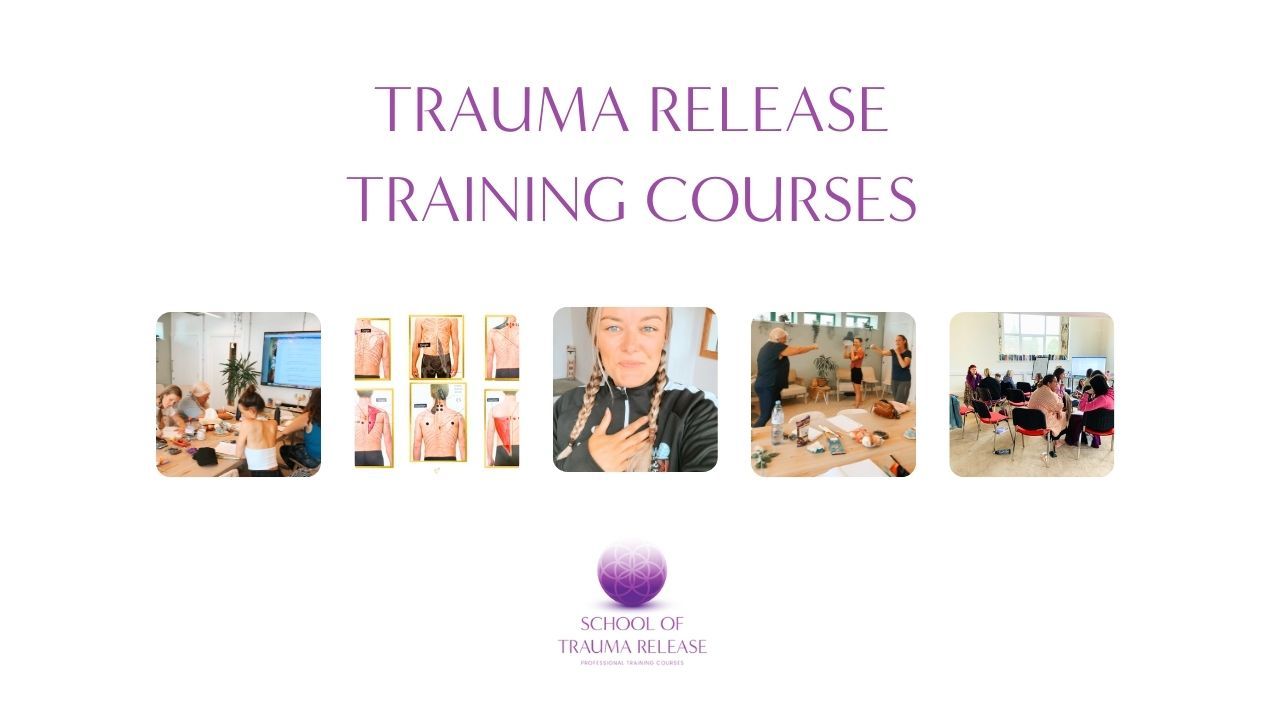
- Professional training and CPD in trauma-informed bodywork and somatic practice
Our trainings cover:
- Somatic foundations for stress and trauma
- Vagus nerve tools and regulation
- Muscle-based tension release techniques
- Practitioner self-regulation and ethics
You don’t need a bodywork background, many participants are qualified therapists, coaches, or holistic practitioners looking to deepen the body-mind connection in their work.
About the School
The School of Trauma Release is led by Lexi Dells and Judith Hart, with over 30 years of combined experience in trauma support and education.
Lexi holds a Master’s in Education and is a trained practitioner in kinesiology, trauma release and somatic movement. Her own recovery from PTSD using this work informs how it’s taught and held. Judith is a senior Kinesiology Teacher Trainer with two decades of clinical practice and a commitment to safe, ethical, client-centred care.
In Summary
Somatic therapy, particularly Trauma Release (Kinesiology Informed), offers a grounded, practical way to support the nervous system, so that what is known in the mind can finally feel safe in the body.
For clients and therapists alike, it offers a missing piece: a way to bridge the gap between insight, embodied change and nervous system regulation. When they body feels safe, it can hold more love.
We have also shared this blog on www.cornwallcounsellingdirectory.co.uk who provide a range of incredible counselling services in and across Cornwall and some online in a wider area too.
Click Here To See Our Trauma Recovery Training